


Views: 0 Author: Site Editor Publish Time: 2026-04-01 Origin: Site


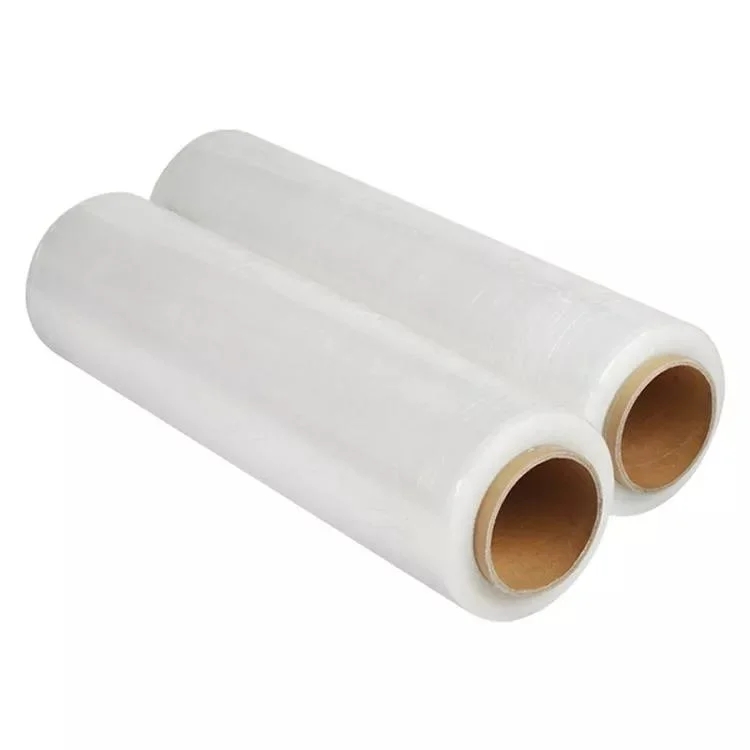
At the heart of modern logistics and warehousing lies a simple yet powerful material: PE stretch film. Made from Linear Low-Density Polyethylene (LLDPE), its remarkable elastic recovery is the industry standard for securing palletized loads. This material property allows the film to stretch under tension and then attempt to return to its original size, creating a constant, containing force around the cargo. However, the industry mindset has evolved. We've moved beyond merely "wrapping" products to a science of "load containment"—an engineered approach to ensuring stability and safety. This guide is for operations managers and procurement specialists. You will learn how to optimize film usage, reduce your total cost of ownership (TCO), and guarantee that your shipments arrive intact, every single time.
The 50% Overlap Rule: The industry standard for ensuring consistent puncture resistance and containment force.
Containment Force vs. Tension: Understanding that "tightness" is secondary to the ASTM-standard containment force (ideally 1% of the load weight).
Cast vs. Blown Selection: Choosing the right manufacturing process (Cast for clarity/quiet; Blown for high-puncture resistance).
Sustainability through Downgauging: How high-performance "equivalent" films reduce plastic waste while maintaining load integrity.
Selecting the correct PE Stretch Film is the first and most critical step in achieving secure load containment. Your choice impacts everything from cost-per-pallet to transit safety and operational efficiency. The decision primarily revolves around the film's manufacturing process, its thickness (gauge), and specialized features like pre-stretching.
The two dominant manufacturing methods, Cast and Blown, produce films with distinct performance characteristics. Neither is universally superior; the right choice depends entirely on your specific application and priorities.
Cast film is produced by extruding heated resin through a flat die onto a chilled roller. This rapid cooling process aligns the polymer molecules, resulting in exceptional clarity and a very quiet unwind. Its consistent thickness and two-sided cling make it a favorite for high-volume, automated environments.
High Clarity: Excellent for operations that rely on barcode scanning through the film.
Quiet Unwind: Reduces noise pollution on busy packing floors, improving the work environment.
Lower Cost: The manufacturing process is generally faster and less expensive, translating to a lower price-per-roll.
Consistent Cling: Offers reliable performance on uniform, standard pallet loads.
Blown film is made by extruding resin through a circular die and then inflating it into a large bubble. This slower cooling process gives the film a crisscross molecular orientation, resulting in higher toughness and puncture resistance. It's often referred to as having superior "stretch memory."
Superior Puncture Resistance: The best choice for securing loads with sharp corners, protruding edges, or irregular shapes.
High Cling: Typically offers a more aggressive cling on one side, which can be beneficial in dusty or cold environments.
Excellent Load Retention: Its tendency to shrink back after stretching provides outstanding holding force for heavy or shifting loads.
Gauge measures the thickness of the film in microns or mils. A higher gauge means a thicker, stronger film, but also a higher cost. The goal is to use the lowest effective gauge that provides sufficient containment force for your load profile.
60–70 Gauge: Ideal for light, uniform loads under 1,800 lbs. Think of stacked boxes of equal size that are inherently stable.
80 Gauge: This is the workhorse of the industry. It's a versatile choice for a wide range of pallet loads, typically from 1,800 to 2,400 lbs, with few sharp points.
100–150+ Gauge: Reserved for heavy-duty applications. This is necessary for securing industrial equipment, palletized stone, or any load over 2,500 lbs that poses a high puncture risk.
Modern film technology has introduced innovative options that challenge traditional gauge selection. Hybrid or "Equivalent" films are multi-layer stretch films that deliver the performance of a higher gauge film in a thinner profile. For example, a 63-gauge equivalent film might match the strength of a standard 80-gauge film, reducing material usage and cost. Pre-stretched film is stretched close to its ultimate break point during manufacturing. This makes it easier for operators to apply by hand, reducing physical strain and ensuring more consistent tension. It's an excellent choice for manual operations where operator fatigue is a concern.
Even with the rise of automation, manual wrapping remains essential in many operations. Proper technique is not about speed; it's about safety, consistency, and creating a secure load. Using a quality stretch film wrap with the right method prevents product damage and employee injury.
Before you begin, focus on ergonomics. Stand with your feet shoulder-width apart and keep your back straight. The power for wrapping should come from your legs and core, not your back. Bending at the waist while pulling on the film is a primary cause of back strain. We also recommend wearing cotton-palm gloves. They provide a better grip and protect your hands from friction heat that can build up on the roll's core during application.
A load is only as secure as its anchor to the pallet. If the film isn't locked to the base, the entire load can shift and slide off during transit. This is where the rope technique is indispensable.
Pull out about a yard of film from the roll.
Bunch and twist this section together to form a tight, strong "rope."
Thread this rope through a corner of the pallet, bring it up, and tie it securely to itself.
Press the remaining flat film against the load. This initial anchor is the foundation of a stable wrap.
With the film anchored, you can begin the wrapping process. Always work from the bottom of the pallet upwards.
Secure the Base: The most critical area is where the product meets the pallet. Apply a minimum of 3 to 5 revolutions around the base, ensuring the film covers both the bottom of the load and the pallet itself. This step physically locks the goods to the pallet.
The 50% Overlap Principle: As you begin to move up the pallet, each new revolution of film should cover 50% of the previous one. Maintain a steady, consistent pace. This overlap ensures there are no gaps or weak points in the containment wall you are building. It distributes the holding force evenly and doubles the film's strength against punctures.
Once you reach the top of the load, ensure the top layer of boxes is fully secured with at least two revolutions. For loads that are unstable or top-heavy, use a cross-wrapping technique. Drape the film diagonally across the top corner of the load, bring it down to the opposite bottom corner, and then repeat for the other two corners. This creates an "X" pattern on top, preventing boxes from shifting or toppling.
After completing the wrapping, tear the film from the roll. Take the loose end, or "film tail," and smooth it flat against the side of the pallet. The film's natural cling will hold it in place. A loose tail can get caught on forklifts, conveyor systems, or other pallets, causing the entire wrap to unravel. A clean finish is a mark of professional wrapping.
When daily pallet volume exceeds 15-20 units, transitioning to a stretch film machine becomes a strategic necessity. Automation introduces consistency, speed, and material savings that are impossible to achieve manually. Optimizing a machine wrapper involves understanding its capabilities and calibrating it for maximum efficiency.
Choosing the right machine depends on your specific needs:
Turntable Wrappers: The pallet is placed on a rotating platform. The film carriage moves vertically as the pallet spins. These are the most common type and are ideal for stable, relatively lightweight loads (under 5,000 lbs).
Rotary Arm Wrappers: The pallet remains stationary while an overhead arm rotates around it, dispensing the film. This is the preferred solution for very heavy, unstable, or lightweight loads that might be thrown off a turntable.
The single greatest advantage of a machine wrapper is its pre-stretch capability. The machine's film delivery system has two rollers that rotate at different speeds, stretching the film between them before it is applied to the load. High-performance machine stretch films are engineered to achieve pre-stretch ratios of 200% to 400%. This means one foot of film from the roll becomes three to five feet of film applied to the pallet. This process not only orients the polymer molecules for maximum strength but also dramatically reduces the amount of film used, significantly lowering your "cost-per-pallet."
Tension is not the same as containment force. A machine's tension setting merely controls how tightly the film is pulled. The true measure of load security is containment force—the cumulative squeezing pressure the film exerts on the load. The industry standard, guided by ASTM D4649, is that the containment force should be approximately 1% of the load's weight, measured at multiple points. Using a containment force tool is the only reliable way to calibrate your machine properly and ensure you are not under-wrapping (risking failure) or over-wrapping (crushing product and wasting film).
Even well-maintained machines can have issues. Here are a few common problems and their likely causes:
Film Breaks: This is often caused by setting the pre-stretch percentage too high for the film being used, or by sharp corners on the pallet puncturing the film. Check your settings and consider adding corner protectors to the load.
"Long Tails": If the film tail is not properly secured at the end of the cycle, it can unravel. This is usually an issue with the cut-and-wipe mechanism needing adjustment or cleaning.
Load Crushing: This is a clear sign of excessive tension or containment force. You are applying too much pressure, which can damage packaging and the product inside. Reduce your tension settings and re-measure the containment force.
A sophisticated approach to stretch film for wrapping looks beyond the simple price-per-roll. True procurement excellence focuses on the Total Cost of Ownership (TCO) and the overall security of your shipments. Making decisions based solely on the cost of a roll can lead to significant hidden expenses down the line.
The most important metric is your Cost-Per-Load (CPL). A cheaper, lower-performance roll of film may require more revolutions to secure a pallet, ultimately costing you more in material and labor than a premium film that can be pre-stretched to 300%. Calculating your CPL involves measuring the weight of film used on a typical pallet and multiplying it by the cost-per-pound of the film. This data-driven approach often reveals that higher-quality films deliver a lower overall cost.
Downgauging is the practice of reducing film thickness without compromising load containment. This is made possible by modern multi-layer, high-performance films. An "equivalent" 51-gauge film can replace a traditional 80-gauge film, providing the same or better holding force. This strategy offers multiple benefits:
Cost Savings: You use less plastic by weight, directly reducing material costs.
Sustainability: Lower plastic consumption reduces your environmental footprint.
Efficiency: Lighter rolls are easier for operators to handle and can lead to fewer roll changes on machines.
Attempting to save money by using insufficient film is a dangerous gamble. The cost of a single damaged or rejected shipment almost always outweighs years of savings from under-wrapping. These costs include:
Product Damage: The direct loss of unsalvageable goods.
Return Freight: The cost of shipping damaged goods back to your facility.
Administrative Costs: Labor hours spent processing claims and arranging new shipments.
Reputational Damage: The loss of customer trust and potential future business.
Properly securing your load with the right amount of a quality pallet wrap stretch film is an investment in risk management.
Environmental responsibility is a growing factor in packaging decisions. LLDPE, the material used in stretch film, is a Category 4 plastic and is highly recyclable. Many businesses establish closed-loop recycling programs with their suppliers to collect and reprocess used film. Additionally, look for films with Post-Consumer Recycled (PCR) content. Using films with PCR content helps support the circular economy and can meet corporate sustainability goals and regulatory requirements.
Mastering the use of stretch film involves avoiding common pitfalls that compromise safety and effectiveness. Even small errors, repeated over hundreds of pallets, can lead to significant problems. Training your team on these best practices is crucial for an efficient and safe operation.
The most frequent and costly mistake is failing to adequately secure the load to the pallet. Industry analysis suggests that a vast majority of in-transit load failures originate at the base. Operators trying to save time or film may only apply one or two revolutions at the bottom. This is insufficient. As mentioned, a minimum of 3 to 5 wraps locking the bottom of the load to the pallet itself is non-negotiable. Without this solid foundation, the entire load is prone to shifting and failure.
Most stretch films are manufactured to have more "cling" on one side than the other. This high-tack side is intended to face the load. When wrapped correctly, the clingy inside surface holds the layers together tightly, while the less-tacky outside surface is less likely to stick to other pallets during transport or storage. Wrapping with the cling side out can cause pallets to fuse together, leading to torn film and damaged product when they are separated.
Manual wrapping can be physically demanding and poses ergonomic risks if not done correctly. Proper training is essential for preventing injuries.
Walk Forward, Don't Walk Backward: Operators should always face the direction they are moving. Walking backward while pulling a heavy roll of film is a major trip-and-fall hazard. Teach staff to walk forward around the pallet.
Use Proper Dispensers: Simple hand-saver dispensers are inexpensive tools that can make a huge difference. For higher volume manual wrapping, invest in dispensers with tension brakes. These devices hold the roll and allow the operator to set the tension, reducing strain on their hands, wrists, and back.
Bend at the Knees: When wrapping the bottom of the pallet, operators must bend at their knees, keeping their back straight. This uses the powerful leg muscles instead of straining the lower back.
Mastering the use of PE stretch film transforms it from a simple packaging supply into a strategic asset for your business. It's about engineering load stability, not just covering boxes. By focusing on a few core principles, you can enhance safety, reduce costs, and ensure your products arrive in perfect condition.
Recap of Best Practices: Always prioritize correct film selection based on your load type (Cast vs. Blown). Adhere strictly to the 50% overlap rule and ensure the load is locked to the pallet with at least three bottom wraps. Regularly test your containment force, especially when using machines.
Next Steps for Operations: Take action today. Conduct a comprehensive "film audit" on your packaging line. Identify opportunities for downgauging to a high-performance equivalent film. Calibrate your wrapping machines to the ASTM standard for containment force. By treating load containment as a science, you will unlock significant improvements in efficiency and your bottom line.
A: The primary difference is the application method. Stretch film is a highly stretchable plastic film that is wrapped around items. Its elastic memory keeps the load tight. Shrink wrap is a material that shrinks when heat is applied. You loosely cover an item with shrink wrap and then use a heat gun or heat tunnel to make it conform tightly to the object.
A: Signs of over-wrapping include crushed boxes or damaged product, difficulty scanning barcodes through too many layers, and an excessively high cost-per-load. The best method is to use a containment force tool. If your containment force is significantly higher than 1% of the load's weight, you are likely using too much film or excessive tension.
A: Yes. PE stretch film is made from LLDPE, which is a Category 4 plastic and is fully recyclable. However, it typically cannot be recycled in residential curbside bins. It requires collection through commercial recycling streams. Many companies set up programs to collect clean, used stretch film and send it to specialized recyclers.
A: This depends on volume. If you are wrapping fewer than 15 pallets per day, hand wrapping is generally more cost-effective. If your volume exceeds 15-20 pallets per day, a stretch wrapping machine is a wise investment. It will provide significant savings in film costs due to pre-stretching, improve load consistency, and increase throughput.
A: For a standard, relatively uniform pallet load of 2,000 lbs, an 80-gauge film is the industry-standard recommendation. However, if you are using a modern multi-layer "equivalent" film, you might be able to use a thinner, high-performance film (e.g., 63-gauge) to achieve the same or better containment force, thereby saving on material costs.


 glorysales005@163.com
 +86-13791552691
 1733, Chengjian Times Square, Tongda Road, Lanshan District, Linyi City, Shandong Province, China